
Running your first email campaign can feel simple in the beginning, but understanding the results afterward is what truly matters. Many people spend time writing emails, selecting subject lines, and designing layouts, yet they fail to measure performance properly. Tracking allows you to understand how subscribers react to your content, which emails attract attention, and what actions readers take after opening your message. Without proper measurement, improving future email marketing campaigns becomes difficult because there is no clear direction for improvement. Even a small campaign can provide valuable insights when the right metrics are monitored consistently.
Why Tracking Matters in Email Marketing
Tracking is important because it helps businesses understand audience behavior through real data instead of assumptions. Every campaign provides information about subscriber interests, reading habits, and engagement patterns. When marketers analyze campaign results regularly, they can improve future content, choose better sending times, and create emails that connect more effectively with readers. A strong email marketing campaign strategy depends heavily on performance analysis because subscriber preferences often change over time. Businesses that ignore tracking usually repeat the same mistakes without realizing why engagement remains low.
Benefits of Tracking Email Campaign Performance
- Helps identify which subject lines attract more opens
- Shows which content generates higher engagement
- Improves future campaign planning and targeting
- Helps reduce unsubscribe rates over time
- Makes audience behavior easier to understand
- Supports smarter content and timing decisions
Tracking also helps marketers understand whether subscribers are actively interested or simply ignoring emails in crowded inboxes.
Main Metrics You Should Measure
Open Rate
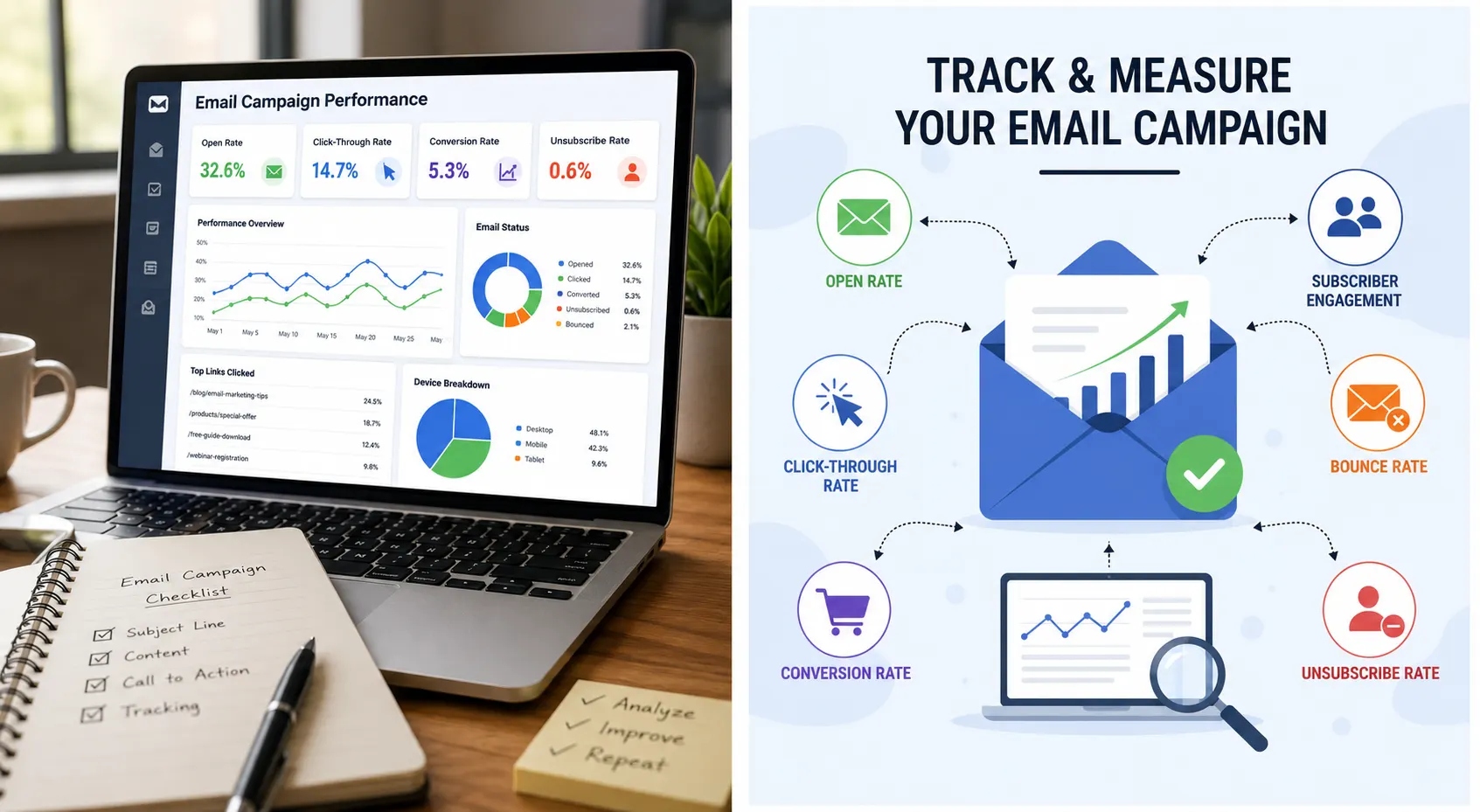
Open rate measures how many subscribers opened your email after receiving it. This metric mainly reflects the effectiveness of your subject line, sender name, and email timing. If open rates remain low, the issue may involve weak subject lines, poor audience targeting, or emails landing in spam folders. Many successful email marketing campaigns focus heavily on improving open rates because the email must first be opened before any further action can happen.
Click-Through Rate
Click-through rate shows how many readers clicked a link inside the email. This metric helps determine whether the email content encouraged subscribers to interact further. Strong click rates often indicate that the email was relevant, easy to read, and supported by a clear call-to-action. Poor click rates may suggest that the email content lacked clarity or failed to match subscriber interests.
Conversion Rate
Conversion rate tracks the number of subscribers who completed a desired action after clicking the email link. This could include signing up for a webinar, making a purchase, downloading a resource, or filling out a contact form. Conversion tracking is important because high open or click rates alone do not always produce real business results. Measuring conversions provides a clearer understanding of campaign success in campaigner email marketing efforts.
Bounce Rate
Bounce rate refers to emails that could not be delivered successfully. Hard bounces usually happen because email addresses are invalid or inactive, while soft bounces occur because of temporary issues such as full inboxes or server problems. Monitoring bounce rates helps maintain a healthy email list and protects sender reputation over time.
Unsubscribe Rate
Unsubscribe rate measures how many people removed themselves from your email list after receiving a campaign. A sudden increase in unsubscribes may indicate that the content feels repetitive, irrelevant, or too frequent. Reviewing unsubscribe patterns helps businesses improve content quality and maintain stronger subscriber relationships.
Useful Tools for Tracking Campaign Results
Most email marketing platforms already include built-in tracking dashboards that help users monitor performance in detail. These systems provide useful reports about subscriber behavior, link activity, and overall campaign engagement. Beginners often ignore these features even though they contain valuable information that can improve future campaign planning.
Common Features Available in Tracking Tools
- Open and click tracking reports
- Subscriber activity monitoring
- Device and browser insights
- Unsubscribe and bounce reports
- Geographic engagement data
- Real-time campaign performance updates
Using these tools regularly makes it easier to understand what works well and which areas require improvement in future email marketing campaign planning.
Understanding Subscriber Behavior Through Data
Tracking data becomes more valuable when marketers focus on understanding subscriber behavior instead of only reviewing numbers. For example, if subscribers consistently engage more with emails sent in the evening, it may indicate that your audience checks emails after work hours. Similarly, some audiences prefer educational content while others respond better to updates, announcements, or promotional offers. Different types of email campaigns also perform differently because subscriber expectations vary depending on the message purpose. Welcome emails usually receive strong engagement because new subscribers are naturally more interested during the first interaction with a business.
Common Mistakes Beginners Make
Many beginners misunderstand tracking by focusing only on open rates while ignoring other important metrics like conversions and unsubscribe trends. Some marketers also check reports too early before enough subscriber activity has occurred. Poor formatting, excessive content, weak calls-to-action, and inconsistent sending schedules can also negatively affect campaign performance.
Common Tracking and Campaign Mistakes
- Sending emails without clear goals
- Ignoring mobile-friendly formatting
- Writing very long and cluttered content
- Using misleading or confusing subject lines
- Comparing unrelated campaigns unfairly
- Focusing only on vanity metrics
- Avoiding regular testing and optimization
Avoiding these mistakes helps create more reliable performance data and improves campaign quality over time.
How A/B Testing Improves Campaign Performance
A/B testing is one of the simplest ways to improve email marketing campaigns because it allows marketers to compare two versions of the same email. Businesses can test subject lines, email layouts, call-to-action buttons, sending times, and content length to identify which version produces better results. For example, one subject line may sound direct while another feels more casual. Comparing engagement results helps marketers understand audience preferences more accurately. Small improvements from consistent testing often produce noticeable long-term growth.
Building a Long-Term Tracking Routine
Successful email marketing depends on consistency rather than one-time improvements. Reviewing reports after every campaign helps identify patterns and build stronger future strategies. Many businesses create monthly reports that compare open rates, clicks, conversions, subscriber growth, bounce rates, and unsubscribe trends. This process helps improve audience targeting and content planning over time. Combining performance analysis with structured planning methods like Email Marketing Strategies can also help businesses organize campaigns more effectively and maintain stronger subscriber engagement.
Final Thoughts
Tracking email performance is an essential part of building stronger communication with subscribers because it reveals how audiences react to different types of content, subject lines, and campaign structures. Businesses that regularly analyze results can improve engagement, increase conversions, and reduce common campaign mistakes over time. Even small changes based on real data can produce meaningful improvements in campaign performance. Companies such as SandStream Marketing often recognize that long-term success in email communication depends more on consistent analysis and gradual improvement than simply sending emails frequently.
Want to track your email campaigns more effectively and turn data into real growth? Contact SandStream Marketing to get expert help with analytics, tracking, and optimization.