As businesses move toward a privacy-focused digital future, collecting customer information responsibly has become more important than ever. Consumers want transparency, control, and personalized experiences without sacrificing their privacy. This shift has made zero-party data a valuable asset for businesses looking to build stronger customer relationships.
Unlike third-party data, zero-party data is shared directly by customers through surveys, preference centers, quizzes, and account settings. Combined with consent-based marketing, businesses can create personalized experiences while respecting user privacy. In this guide, you’ll learn how to build an effective zero-party data strategy, prepare for customer data collection 2026, implement a cookieless tracking strategy, and embrace privacy-first data marketing.
What Is Zero-Party Data?
Zero-party data is information that customers intentionally provide to a business. It includes preferences, interests, communication choices, and purchase intentions that customers willingly share.
Unlike traditional tracking methods, zero-party data is collected with permission, making it more accurate and reliable. As businesses prepare for customer data collection 2026, collecting data directly from customers will become an essential part of every marketing strategy.
Why Zero-Party Data Matters
Growing privacy regulations and the removal of third-party cookies have changed digital marketing. Businesses now need a better way to understand customers while protecting their privacy.
Using zero-party data helps brands:
- Build customer trust
- Deliver personalized experiences
- Improve marketing accuracy
- Reduce dependence on cookies
- Support long-term growth
Combining zero-party data with consent-based marketing creates stronger relationships because customers know exactly how their information will be used.
Benefits of Using Zero-Party Data
A strong zero-party data strategy offers several advantages beyond meeting privacy requirements. It helps businesses create better customer experiences while improving marketing performance.
- Better Personalization
Because zero-party data comes directly from customers, businesses can deliver personalized recommendations, relevant content, and targeted offers. Instead of guessing customer preferences, marketers can use accurate information to create meaningful experiences.
Higher Customer Trust
Customers appreciate transparency. Explaining how information is collected and used builds confidence and encourages people to share their preferences. This approach supports privacy-first data marketing while strengthening long-term relationships.
Improved Marketing Performance
Marketing campaigns perform better when they are based on customer preferences instead of assumptions. Using zero-party data improves email campaigns, landing pages, and personalized offers, resulting in higher engagement and better conversion rates.
Better Compliance
Privacy laws continue to evolve worldwide. Following consent-based marketing practices ensures customer information is collected responsibly while reducing compliance risks.
How to Build a Zero-Party Data Strategy
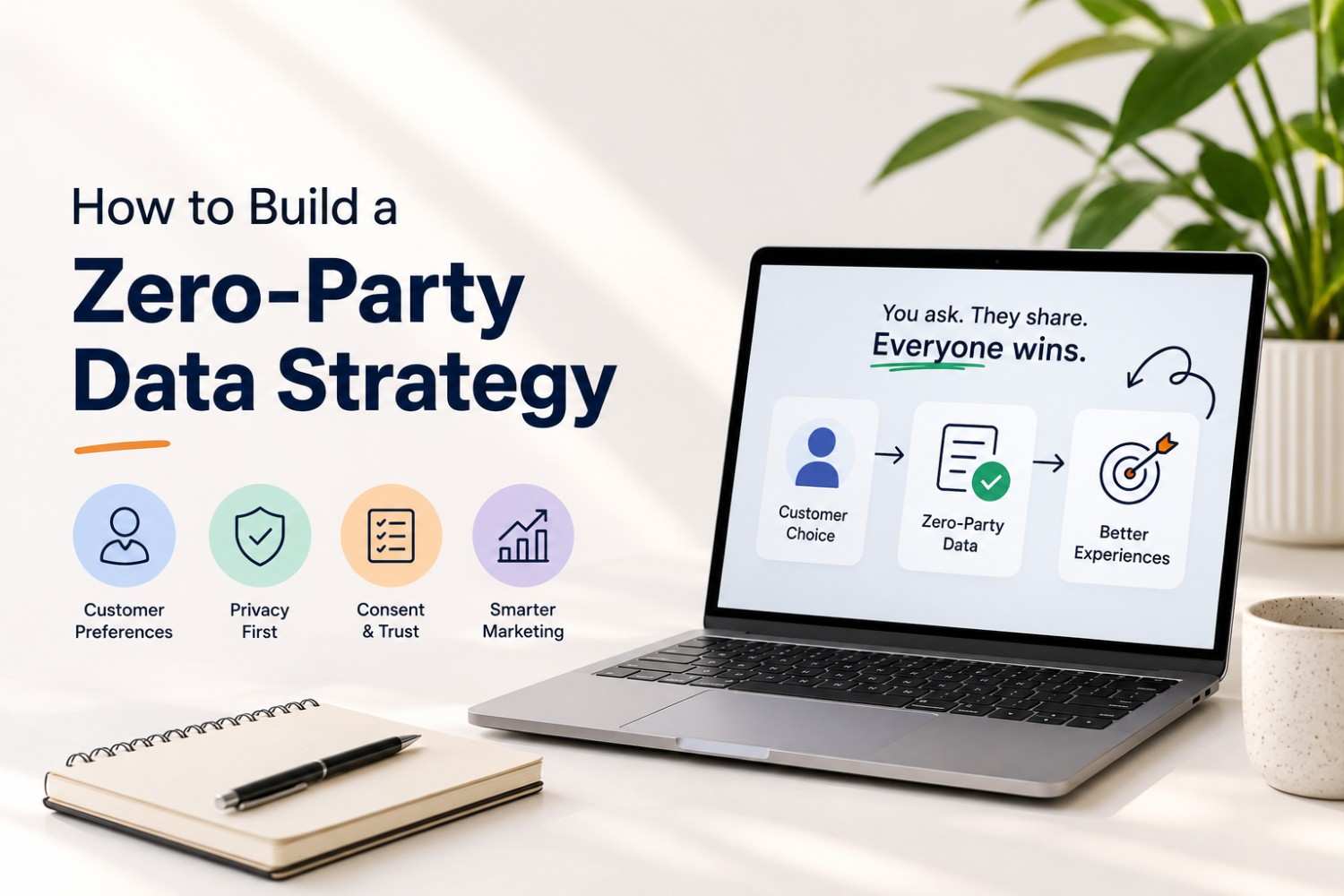
A successful zero-party data strategy is built on trust, transparency, and providing value. By collecting information directly from customers with their permission, businesses can create stronger relationships while supporting privacy-first data marketing.
Be Transparent About Data Collection
Always explain what information you’re collecting, why you’re collecting it, and how it will improve the customer experience. Being transparent encourages customers to share their information with confidence.
Provide Value in Exchange
Customers are more likely to share zero-party data when they receive something valuable in return. Offering personalized recommendations, exclusive content, discounts, or loyalty rewards creates a win-win experience for both your business and your customers.
Use Interactive Tools
Interactive experiences such as quizzes, surveys, preference centers, and product finders make data collection engaging rather than intrusive. These tools help gather meaningful insights while improving customer engagement.
Keep Forms Short and Simple
Request only the information you truly need. Simple forms are easier to complete, improve response rates, and support effective customer data collection 2026 without overwhelming users.
Allow Customers to Update Their Preferences
Give users the flexibility to manage their communication preferences, interests, and personal information whenever they choose. Keeping customer preferences up to date improves personalization and strengthens your privacy-first data marketing strategy.
Creating a Cookieless Tracking Strategy
As third-party cookies disappear, businesses need a reliable cookieless tracking strategy. Instead of depending on browser tracking, companies should focus on collecting zero-party data through direct customer interactions.
A successful cookieless tracking strategy includes first-party analytics, customer accounts, email subscriptions, preference centers, and interactive tools. These methods provide valuable insights while respecting user privacy and supporting consent-based marketing.
Preparing for Customer Data Collection 2026
The future of customer data collection 2026 will focus on transparency, permission, and customer trust. Businesses that rely on zero-party data will be better prepared for changing privacy regulations and evolving customer expectations.
Preparing now means investing in consent-based marketing, implementing a cookieless tracking strategy, and adopting privacy-first data marketing across every customer touchpoint.
Best Practices for Privacy-First Data Marketing
To build a successful privacy-first data marketing strategy:
- Always request customer consent.
- Clearly explain how data will be used.
- Protect customer information with secure systems.
- Keep data collection simple and relevant.
- Regularly update customer preferences.
- Review your cookieless tracking strategy as privacy standards evolve.
- These practices strengthen trust while improving marketing performance.
Common Mistakes to Avoid
Avoid asking for unnecessary information or collecting data without explaining its purpose. Businesses should also avoid relying solely on outdated cookie-based tracking methods.
Ignoring consent-based marketing, failing to update customer preferences, or overlooking customer data collection 2026 trends can reduce customer trust and impact long-term success.
Conclusion
The future of digital marketing depends on trust, transparency, and meaningful customer relationships. By investing in zero-party data, businesses can create personalized experiences while respecting user privacy.
Combining zero-party data with consent-based marketing, a reliable cookieless tracking strategy, and privacy-first data marketing prepares businesses for customer data collection 2026 and beyond. Companies that start building trust today will be better positioned to deliver exceptional customer experiences and achieve sustainable growth.