The Search Landscape Has Shifted — Have You?
Think back to 2019. Your digital marketing strategy revolved around ranking on Google’s first page, building backlinks, and perfecting your keyword density. That approach worked — until it didn’t.
Today, a growing number of people don’t even open a search results page. They ask ChatGPT. They type into Perplexity. They let Google’s AI Overview summarize everything before a single link gets clicked. The rules of discovery have fundamentally changed, and brands that fail to adapt are quietly becoming invisible.
This is where large language model optimization (LLMO) enters the picture — and why it’s the strategy your brand simply cannot afford to ignore in 2026 and beyond.
What Is Large Language Model Optimization (LLMO)?
Large language model optimization is the practice of structuring, formatting, and distributing your content so that AI-powered platforms — including ChatGPT, Google Gemini, Perplexity, Microsoft Copilot, and Claude — can discover, understand, and cite your brand in their generated responses.
Unlike traditional SEO, which chases rankings on a list of blue links, LLMO chases citations inside AI-generated answers. The goal isn’t to be on page one. The goal is to be the answer.
When a user asks ChatGPT, “What’s the best digital marketing agency in Omaha?” or “Which companies offer email marketing automation?” — LLMO determines whether your brand gets mentioned or whether your competitor does. It’s that direct. It’s that consequential.
Why LLMO Is Now Non-Negotiable for Brands
The numbers speak loudly. ChatGPT now handles over 2 billion queries every single day, and roughly 65% of those qualify as search-intent queries — the same kind of questions people used to type into Google. Google’s own AI Overviews now appear in nearly 55% of all Google searches, fundamentally changing how users interact with search results.
Meanwhile, Gartner has predicted that traditional search engine volume will fall by 25% by the end of 2026, driven directly by AI-powered alternatives. For brands relying solely on traditional SEO, this isn’t a distant warning — it’s a current reality.
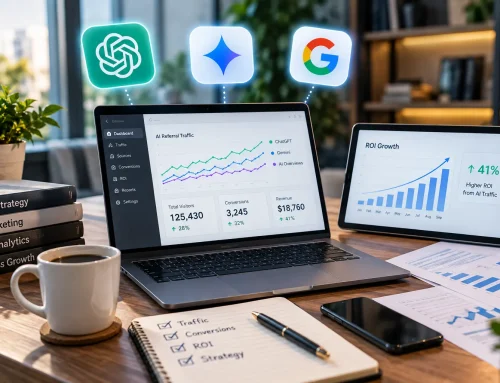
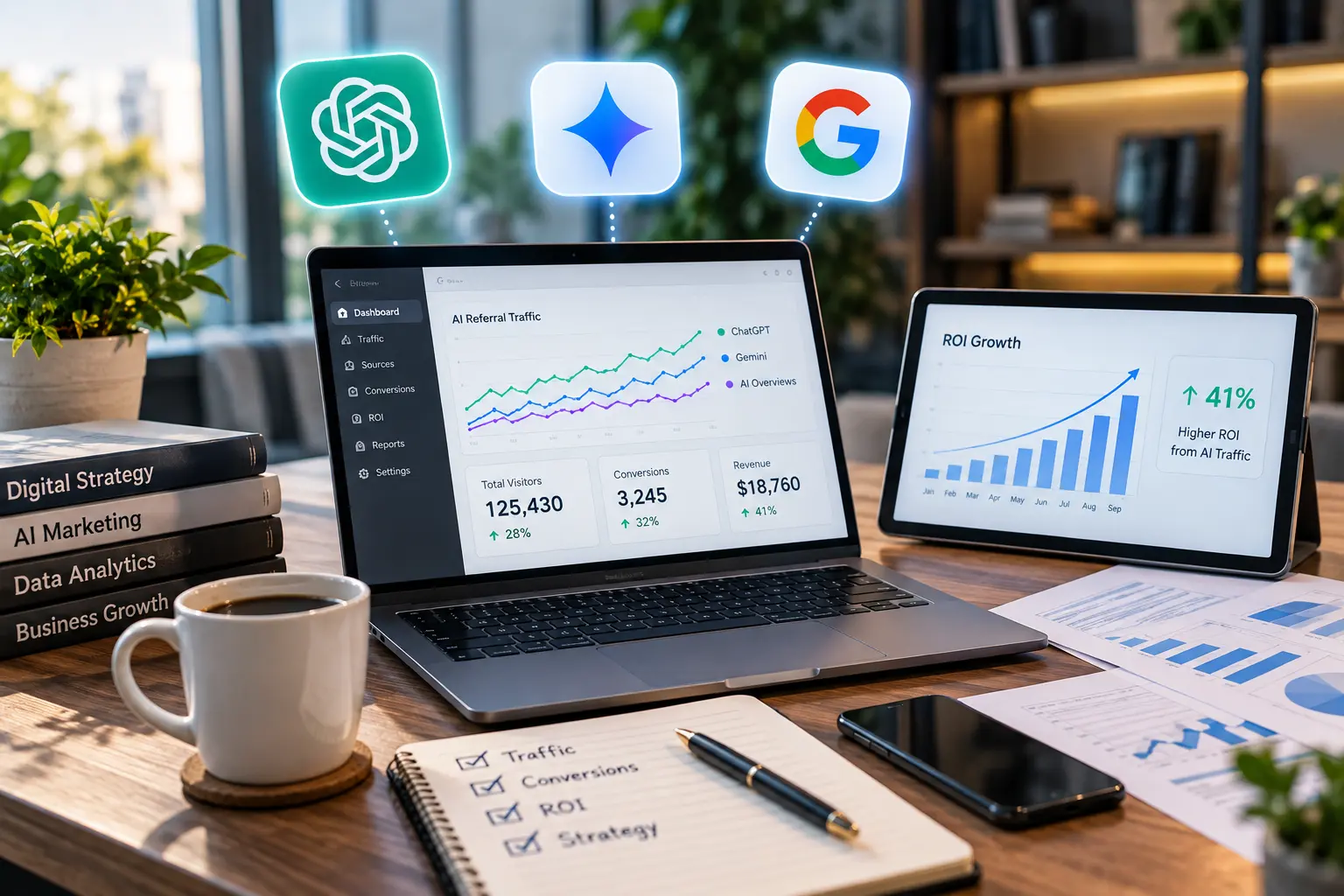
Here’s what makes this shift especially critical: AI traffic converts at a dramatically higher rate. Research shows brands earning citations in AI-generated responses see conversion rates up to 4.4x higher than those from standard organic search clicks. AI users arrive more informed, more intentional, and more ready to take action.
The first-mover window is still open — but it’s narrowing fast. Most enterprise brands have active LLMO initiatives. Most small and mid-sized businesses have not started. That gap represents either a massive opportunity or a massive vulnerability, depending on which side of it you’re on.
How LLMO Differs from Traditional SEO, AEO, and GEO
To build an effective LLMO strategy for your brand, it helps to understand how it relates to the other optimization disciplines in today’s ecosystem.
Traditional SEO: focuses on earning high rankings in Google’s algorithmic search results. It optimizes for crawlers, backlinks, page authority, and keyword relevance. It remains essential — LLMO does not replace it.
Answer Engine Optimization (AEO): evolved from voice search optimization. It focuses on structuring content to appear in featured snippets, direct answers, and AI-driven summaries. AEO is about owning the answer box, not just the ranking.
Generative Engine Optimization (GEO): is the practice of earning citations across multiple AI platforms simultaneously. It focuses on semantic relevance, entity recognition, factual density, and cross-platform brand consistency.
Large Language Model Optimization (LLMO): sits at the intersection of all three. It encompasses the technical, structural, and content-level strategies that make your brand comprehensible and trustworthy to the large language models powering AI search.
The practical reality: brands winning visibility in 2026 are investing in all four disciplines simultaneously, recognizing that each layer reinforces the others.
The 7 Core LLMO Ranking Signals That Drive AI Citations
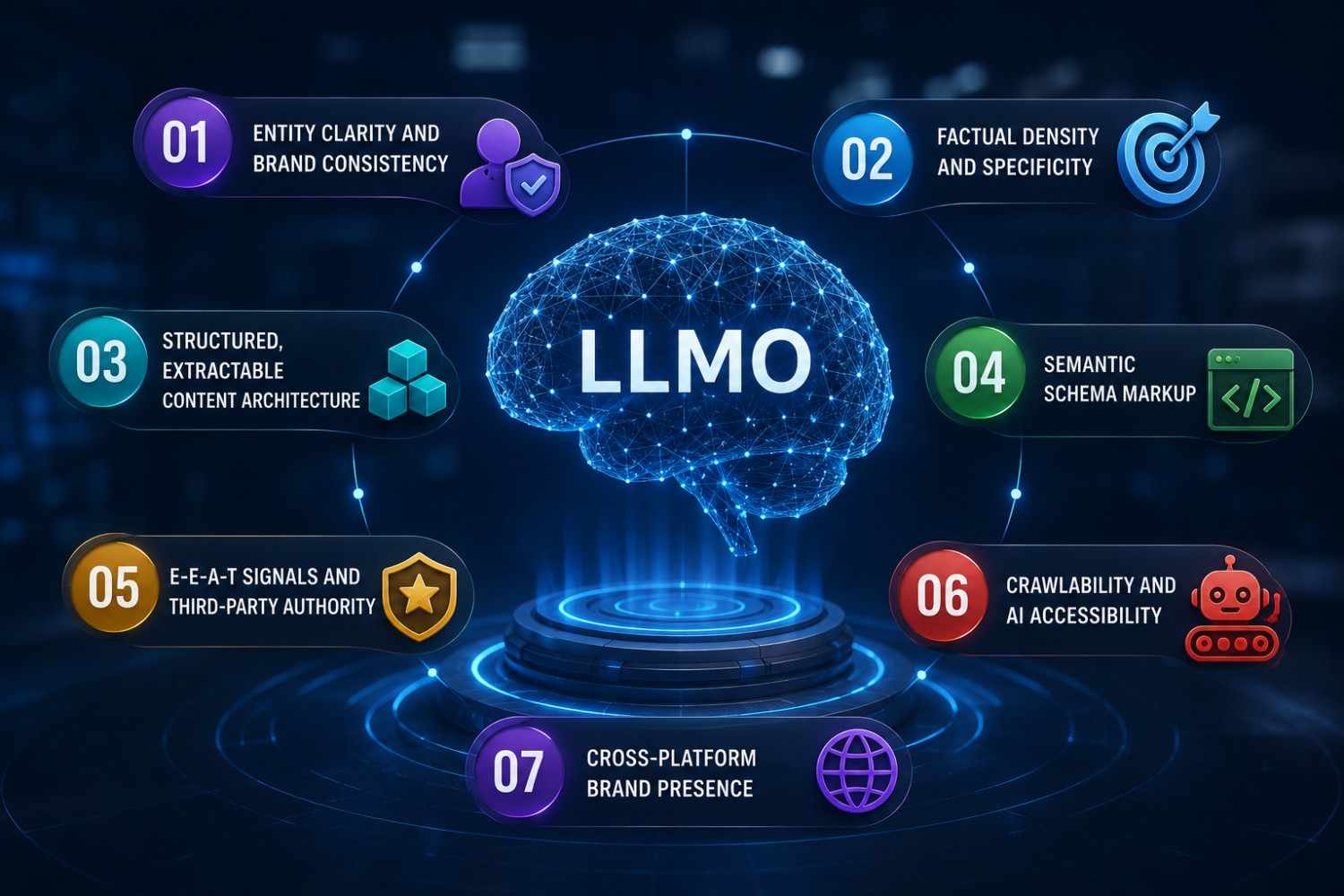
AI platforms don’t rank content the same way Google does. They evaluate different signals. Understanding these signals is the foundation of any effective LLM SEO strategy for businesses.
1. Entity Clarity and Brand Consistency
Large language models build their understanding of your brand from data spread across the entire internet — not just your website. Every mention of your brand name, every description of your services, and every attributed quote in a third-party article adds a data point. Consistent NAP data, consistent service descriptions, and consistent positioning across all touchpoints signal to AI systems that your brand is a stable, trustworthy entity worth citing.
2. Factual Density and Specificity
AI models are trained to prioritize and cite content that contains concrete, verifiable facts. Content that includes specific statistics, named methodologies, attributable data, and clear definitions gets extracted and cited. Every piece of content you publish should contain original data, specific claims, or clearly attributed research.
3. Structured, Extractable Content Architecture
AI systems retrieve content at the passage level, not the page level. Every major section of your content should stand alone as a complete, coherent answer to a specific question. Use clear H2 and H3 headings that mirror natural question phrasing. Write introductory sentences that summarize the section immediately — don’t bury the answer at the end.
4. Semantic Schema Markup
FAQ schema, HowTo schema, Article schema, and Organization schema give AI systems explicit context about what your content means — not just what it says. Schema is a direct communication layer between your content and the machines interpreting it, and continues to influence Google’s AI Overview selection signals.
5. E-E-A-T Signals and Third-Party Authority
AI models prefer content from credible, authoritative sources. They learn credibility signals from editorial mentions, expert bylines, reputable backlinks, Wikipedia citations, academic references, and presence on platforms like Reddit and Quora. Subject matter experts publishing thought leadership and earning industry mentions strengthen LLMO profiles organically.
6. Crawlability and AI Accessibility
Review your robots.txt file to ensure you haven’t inadvertently blocked AI crawlers like GPTBot, Google-Extended, or PerplexityBot. Implement IndexNow for faster content indexing. Ensure pages load quickly and cleanly. If AI systems can’t read your content, they can’t cite it.
7. Cross-Platform Brand Presence
Your presence on Wikipedia, Wikidata, Crunchbase, industry directories, LinkedIn, Google Business Profile, and earned media all contribute to your entity’s recognizability inside AI training data and real-time retrieval systems. Brands that invest in third-party presence build an LLMO footprint that no single website update can replicate.
Building a Practical LLMO Strategy for Your Brand
Understanding the signals is the first step. Executing against them is the work. Here’s how to build a practical LLMO strategy from the ground up.
Step 1: Audit Your Current AI Visibility
Before optimizing, you need to know where you stand. Manually query your brand name, primary service categories, and key competitors across ChatGPT, Google Gemini, Perplexity, and Microsoft Copilot. Document how often your brand appears, whether the AI-generated information about you is accurate, and which competitors are being cited in your place.
Step 2: Identify Your High-Intent Query Targets
Map out the questions your target customers are most likely to ask AI platforms. These aren’t just keywords — they’re conversational questions like “What digital marketing agency in Omaha specializes in email automation?” For each question where your brand should appear but doesn’t, you have a content gap to close.
Step 3: Restructure Existing Content for Passage-Level Extraction
Audit your existing blog posts and service pages. Add question-based H2s and H3s. Frontload answers in the first two sentences of each section. Add specific data, statistics, and examples that AI models can extract and cite.
Step 4: Create Original Research and Data-Rich Content
AI platforms disproportionately cite content that contains original data. Case studies, original surveys, performance benchmarks, industry analyses, and proprietary frameworks give AI systems content worth referencing that they cannot find elsewhere.
Step 5: Build Entity Authority Across Platforms
Ensure your brand entity is consistently and accurately described across Google Business Profile, LinkedIn, Crunchbase, and industry directories. Contribute expert content to respected publications. Build the cross-platform footprint that tells AI systems your brand is real, established, and trustworthy.
Step 6: Implement Schema Markup Comprehensively
Add FAQ schema to every page that answers common questions. Add Organization schema to your homepage. Use Article schema on all blog posts with clear author attribution. These markup decisions give AI systems structured data they can confidently parse and cite.
Step 7: Monitor, Measure, and Iterate
Track citations, brand mentions within AI responses, accuracy of AI-generated descriptions of your brand, and referral traffic from AI platforms via UTM tracking. The brands that maintain visibility treat LLMO as an ongoing discipline, not a one-time project.
The Future of LLMO: What Brands Need to Prepare For
Multimodal AI search is expanding, meaning AI platforms will increasingly retrieve and cite images, videos, and audio content — not just text. Brands that optimize their visual and multimedia content with strong metadata and structured descriptions will gain a meaningful edge.
Personalized AI responses are becoming more sophisticated, with AI platforms tailoring answers based on individual user history and context. Brands with strong entity recognition and consistent messaging across platforms will be better positioned to appear in personalized responses.
Real-time retrieval weight is increasing, meaning AI systems are relying more heavily on live web content rather than static training data. Consistently publishing fresh, authoritative content is becoming more important, not less.
How SandStream Helps Brands Win in the Age of AI Search
At SandStream, we sit at the intersection of digital marketing strategy and emerging AI technologies. We understand that visibility in 2026 isn’t just about ranking on Google — it’s about being chosen by AI.
Our content creation and data strategy services are built to help brands like yours build the kind of authoritative, structured, AI-optimized digital presence that earns citations in ChatGPT, Gemini, Perplexity, and Google AI Overviews. We combine traditional SEO expertise with modern LLMO, AEO, and GEO practices to ensure your brand is visible wherever your customers are searching.
Whether you’re starting from scratch or looking to evolve an existing digital marketing strategy, our team in Omaha is ready to build you a roadmap for AI visibility that drives real business results.
Final Thoughts: The Window Is Open — But Not for Long
Large language model optimization isn’t a future-proofing exercise. It’s a present-tense competitive advantage. The brands investing in LLMO strategies today are building compounding visibility advantages that will be increasingly difficult for late movers to close.
The question isn’t whether AI search will continue to grow. It already has. The question is whether your brand will be visible inside it — or whether you’ll watch your competitors get cited while your content goes unnoticed.
LLMO is the new SEO. And the brands that treat it that way now will be the brands that own their categories in the AI-driven search landscape ahead.
Ready to build your brand’s AI visibility? Connect with the SandStream team today at sandstream.us/connect and let’s build your LLMO strategy together.