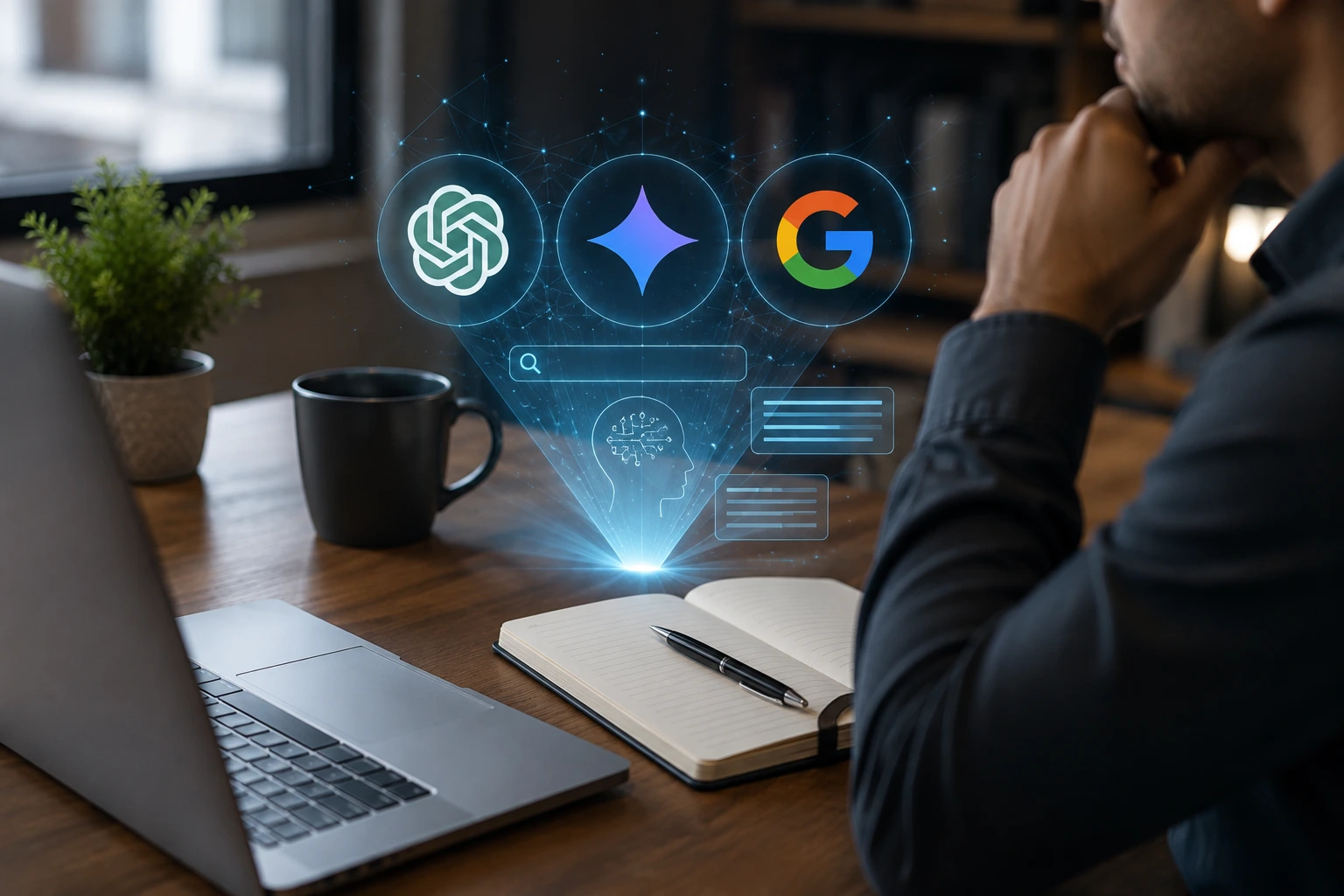
Google AI Overviews now answer a large share of search queries directly on the results page, before a user ever clicks a link. For small businesses exploring AI Agents for Small Businesses, this changes the game: your website content is no longer just competing for the number one blue link, it’s competing to be the source Google’s AI quotes, summarizes, and trusts. If your content isn’t structured for that, you’re invisible in a growing share of search traffic, no matter how well you rank the old-fashioned way.
This guide breaks down exactly how to optimize your content for Google AI Overviews while building visibility around one of the fastest-growing small business topics right now: AI Agents for Small Businesses, alongside the tools driving it: Business AI Automation, AI Customer Support, AI Sales Automation, and AI Marketing Automation.
Why Google AI Overviews Matter for Small Businesses
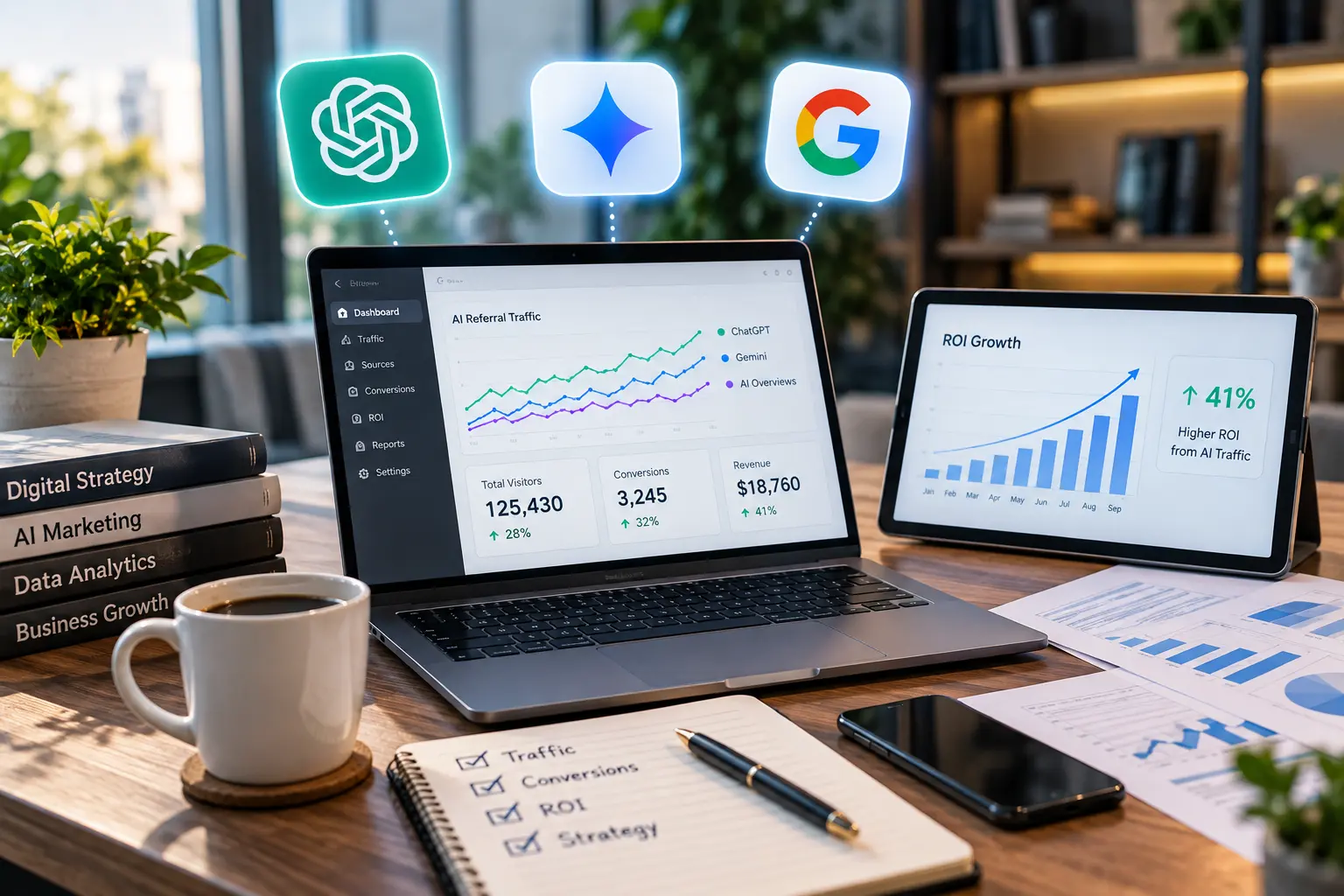
AI Overviews pull information from multiple sources to generate a synthesized answer at the top of the search results page. Similarly, tools like ChatGPT, Perplexity, and Google’s own Gemini are increasingly cited as first-touch research tools for business decisions, which is why Search Engine Optimization (SEO) now has to work alongside Answer Engine Optimization (AEO) and Generative Engine Optimization (GEO).
For a small business owner researching AI Agents for Small Businesses, this means:
- They may never scroll past the AI Overview box
- The businesses cited in that box gain instant credibility
- Content written like a source of truth, not a sales pitch, gets picked up more often
If your blog, service page, or FAQ isn’t structured to be “quotable,” you’re handing that visibility to a competitor.
What Google AI Overviews Actually Look For
Search engines and generative AI models don’t reward keyword stuffing anymore. They reward content that is clear, well-structured, and directly answers a question. Based on how AI Overviews are known to pull and cite content, here’s what tends to get selected:
1. Direct, Front-Loaded Answers
Start each section with a concise answer to the implied question, then expand with detail. If someone searches “what are AI agents for small businesses,” your content should answer that in the first two sentences, not bury it under three paragraphs of introduction.
2. Clear Structure with Descriptive Headers
Use H2 and H3 headers phrased as real questions or clear statements (like the ones in this article). AI systems scan structure to identify which section answers which query.
3. Original Insight, Not Recycled Content
Generic definitions get skipped. Content that includes a specific example, a step-by-step process, or a point of view earns more trust from both readers and AI summarization systems.
4. Structured Data (Schema Markup)
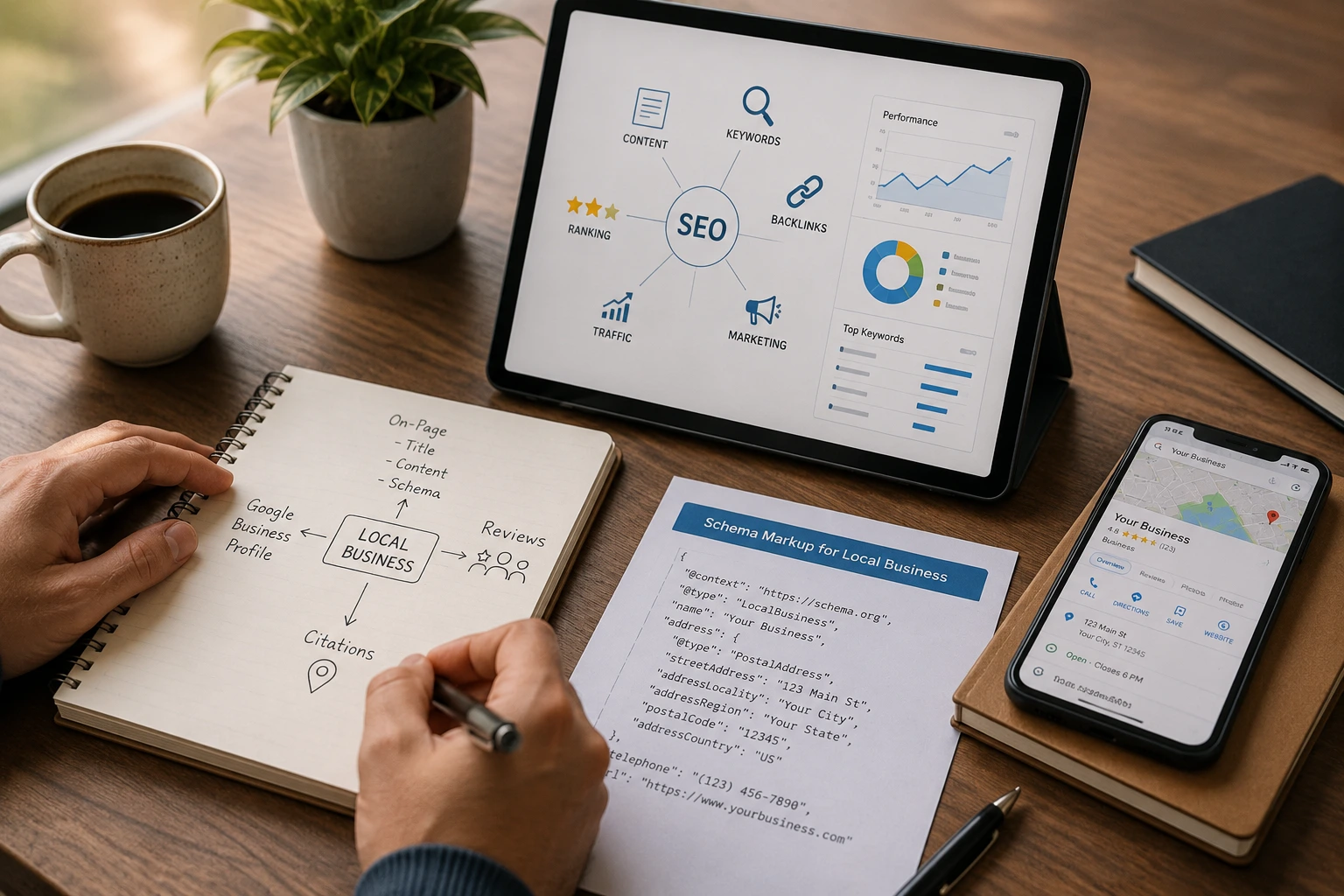
FAQ schema, Article schema, and Organization schema help search engines understand exactly what your content is and who’s behind it, which supports both traditional rankings and AI citation.
5. Authoritativeness and Consistency
AI Overviews tend to favor sources that show topical depth. A single blog post rarely does it. A cluster of related content around the same theme, like AI Agents for Small Businesses, Business AI Automation, and AI Customer Support, builds the topical authority these systems look for.
How AI Agents Are Changing Small Business Operations
AI Agents for Small Businesses are software systems that can complete multi-step tasks with minimal human input, unlike a simple chatbot that just answers one question at a time. Instead of routing a customer to a menu of canned responses, an AI agent can look up an order, check policy, issue a resolution, and log the interaction, without a human touching it.
For small businesses with limited staff, this isn’t a “nice to have.” It’s a way to compete with larger companies that already have dedicated support, sales, and marketing teams.
Here’s where AI agents are showing up across core business functions:
Business AI Automation
Business AI Automation covers the behind-the-scenes work: scheduling, data entry, inventory updates, invoicing, and internal reporting. Instead of a team member manually updating a spreadsheet every morning, an AI agent can pull the data, format it, and flag anomalies automatically. Small businesses adopting this typically start with one repetitive task, prove it works, then expand from there.
AI Customer Support
AI Customer Support agents can now handle order tracking, returns, appointment rescheduling, and common troubleshooting questions around the clock. The difference between this and an old-school chatbot is context: a well-built AI agent remembers the customer’s history and can resolve multi-step issues without handing them back to a human unless it’s genuinely necessary.
AI Sales Automation
AI Sales Automation tools qualify leads, follow up on abandoned inquiries, and even draft personalized outreach based on a prospect’s browsing behavior or past interactions. For a small sales team, this means fewer leads slipping through the cracks and faster response times, which is often the single biggest factor in whether a lead converts.
AI Marketing Automation
AI Marketing Automation handles the repetitive side of marketing: segmenting email lists, timing social posts, personalizing on-site content, and testing ad variations. It frees up a small marketing team (or a solo marketer) to focus on strategy instead of manual execution.
A Practical Framework to Optimize Content for AI Overviews
If you want your content on AI Agents for Small Businesses, or any topic, to actually get picked up by AI Overviews, follow this structure:
- Start with the question, not the backstory. Open each section with a direct answer in plain language.
- Write for skimmability. Short paragraphs, bullet points, and numbered steps make it easier for both readers and AI systems to extract the relevant piece.
- Add an FAQ section. Directly answering common questions in a dedicated section increases your odds of being pulled into an AI Overview or a “People Also Ask” box.
- Mark up your content with schema. FAQ and Article schema aren’t optional anymore if AI visibility is a priority.
- Build topical clusters. Don’t publish one article and stop. Link related content on Business AI Automation, AI Customer Support, AI Sales Automation, and AI Marketing Automation together so search engines see depth, not a one-off post.
- Keep updating. AI Overviews favor content that reflects current information. A blog that hasn’t been touched in two years signals staleness.
Ready to Bring AI Agents Into Your Business?
Optimizing content for Google AI Overviews is only half the equation, the other half is actually having the AI-driven systems in place that your customers and prospects are searching for. If you’re ready to explore how AI Agents for Small Businesses can streamline your support, sales, and marketing, reach out to our team for a strategy session tailored to your business.