Search is undergoing the most significant shift since Google upended the web. For years now, organizations have been ranking their websites by using SEO techniques. With AI search on the horizon, the entire process of discovery, brand evaluation, and purchase behavior will be transformed.
ChatGPT, Google AI Mode, Gemini, Perplexity, and Microsoft Copilot have ushered in an era in which direct answers from AI tools have become the order of the day rather than mere links. In such a setting, there emerges the need for a new technique called ASO, which entails optimizing your content for AI search tools.
Digital marketers need to acquaint themselves with the changes in the landscape in order to be relevant in the future.
What Is AI Search Optimization?
AI Search Optimization is the process of creating and structuring content so that AI-powered search platforms can easily understand, evaluate, and reference it in generated answers.
Traditional SEO focused on:
- Keyword rankings
- Backlinks
- Meta tags
- Technical optimization
AI Search Optimization expands these foundations by prioritizing:
- Context and meaning
- Topical authority
- Content credibility
- Entity recognition
- User intent satisfaction
- Brand trust signals
The goal is not only to rank but also to become a trusted source that AI systems cite when generating responses.
Why AI Search Engines Are Changing Everything
Users are changing the way they search. Instead of typing: “Best CRM software 2026”. They now ask: “What is the best CRM for a small business with less than 20 employees and a limited budget?” AI Search Engines can understand these conversational queries and provide comprehensive answers instantly.
Major AI search platforms include:
- ChatGPT Search
- Google AI Mode
- Google AI Overviews
- Gemini
- Perplexity AI
- Microsoft Copilot
These platforms analyze multiple trusted sources, synthesize information, and deliver personalized answers. As adoption grows, businesses must optimize content not only for search engines but also for AI-generated responses.
The Impact of Google AI Mode on Search Marketing
Google AI Mode marks a truly revolutionary turn in the history of search engine technology.
Google no longer needs to redirect you to several different web pages. Instead, it offers you all the answers in a single AI-generated package.
This development gives rise to:
- More Zero-Click Searches
Users often receive answers without clicking a link on a website. - Greater Emphasis on Authority
Google favors websites that demonstrate expertise, trustworthiness, and credibility. - Enhanced Contextual Understanding
Search engines now evaluate topics and relationships rather than simply matching keywords. - Deeper User Intent Analysis
AI systems focus on understanding why a user is searching rather than just what they typed.
Businesses that provide detailed, trustworthy, and experience-driven content are more likely to be featured in AI-generated answers.
Why Traditional SEO Still Matters
Although many headlines have been suggesting that SEO is now obsolete, this could not be further from the truth. SEO continues to be the backbone of any online presence. From technical SEO, website speed, mobile optimization, website crawling, schema markup, and good-quality backlinks, all of these elements play into how the search engines judge websites. But SEO in 2026 will be far more advanced than before.
Success requires combining:
- Technical SEO
- Content marketing
- User experience
- AI Search Optimization
- Brand authority
- Data-driven insights
Businesses that integrate all these elements will outperform competitors relying on outdated ranking tactics.
Top SEO Trends 2026 Businesses Should Prioritize
1. Topical Authority Is More Important Than Individual Keywords
Search engines will continue to provide incentives to sites that show mastery of the whole field. Rather than developing individual webpages around particular keywords, companies must create comprehensive content centers related to their business field.
2. Experience-Based Content Wins
AI systems favor content backed by:
- Original research
- Case studies
- Industry expertise
- First-hand experience
- Proprietary insights
Generic content generated without expertise is becoming less effective.
3. Structured Data Enhances AI Understanding
Schema markup helps AIsystems interpret website content more accurately. Important schema types include:
- FAQ Schema
- Organization Schema
- Service Schema
- Review Schema
- Article Schema
Proper implementation improves discoverability across both traditional and AI-powered search.
4. Conversational Search Optimization
Search queries are becoming longer and more natural. Businesses should optimize content around questions such as:
- How does this service work?
- What are the benefits?
- Which option is best?
- How much does it cost?
FAQ sections and conversational content formats improve visibility for AI-generated answers.
5. Brand Signals Are Increasingly Valuable
AI systems evaluate a company’s reputation across multiple channels. Factors influencing visibility include:
- Industry mentions
- Reviews
- Social engagement
- Thought leadership
- Digital PR
- Author expertise
Strong brands are more likely to be cited and trusted by AI search engines.
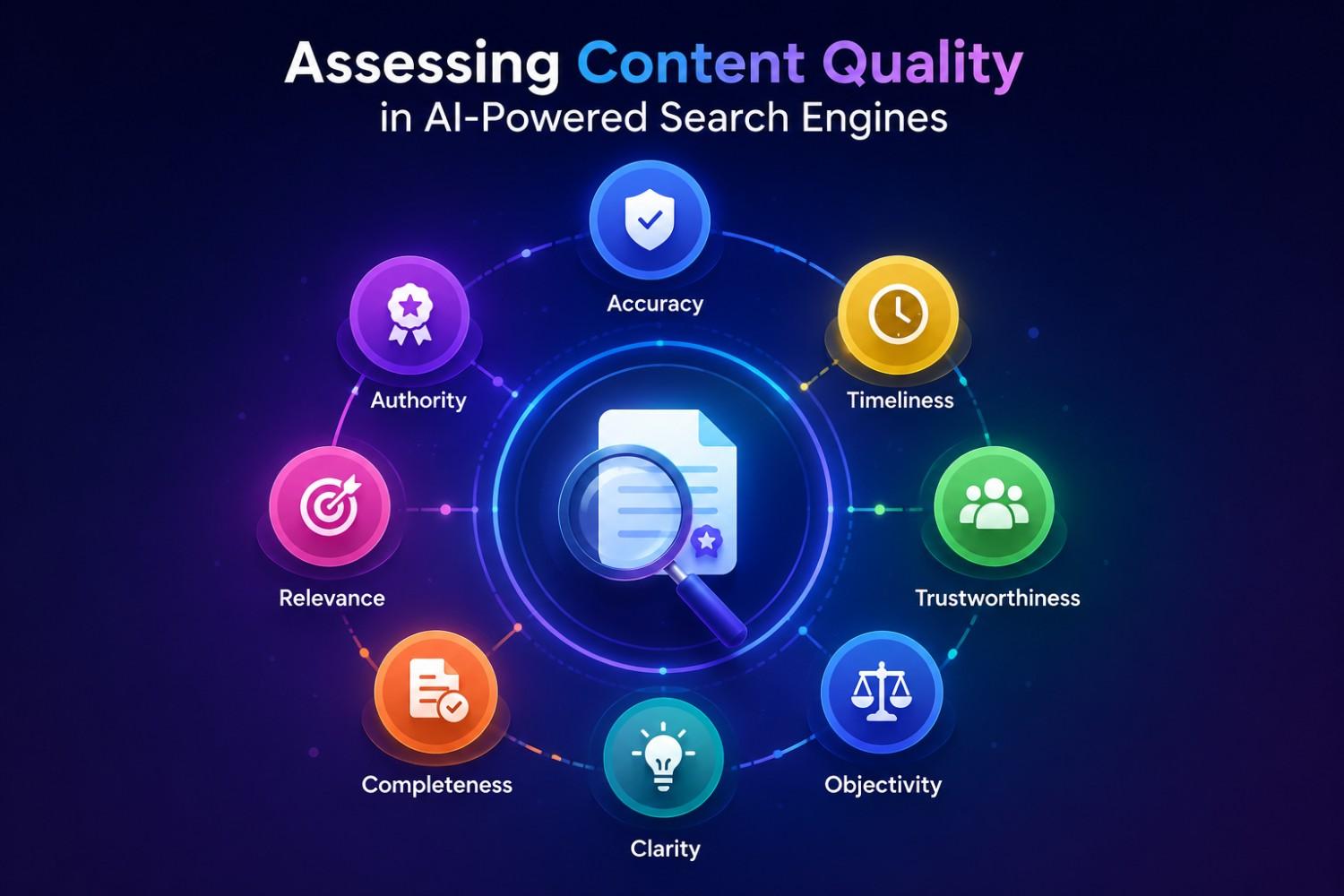
Criteria for Assessing Content Quality in AI-Powered Search Engines
Content is evaluated based on a wider array of criteria compared to conventional search engines.
Relevance: Does the content address the query?
Authority: Is the content from a reliable publisher?
Accuracy: Are the facts up-to-date and factual?
Comprehensiveness: Does the content cover the entire subject?
Value to User: Does the content help users resolve their issues?
Organizations that bring genuine value will be ranked higher in AI search results.
AI Search Optimization Strategies for Businesses
Organizations looking to future-proof their digital presence should focus on the following initiatives.
Create Content That Answers Real Questions
Develop content based on customer pain points and frequently asked questions.
Build Topic Clusters
Establish authority by covering related topics comprehensively.
Optimize Technical SEO
Ensure your website remains:
- Fast
- Secure
- Mobile-friendly
- Crawlable
Structure Your Data
Make sure that search engines can interpret your content through schema markup.
Build Brand Authority
Prioritize content marketing, digital PR, thought leadership, and strategic partnerships in your industry.
Leverage Data & Analytics
Leverage performance data to see how your content is consumed and spot new trends.
What the Future of SEO Looks Like
The future of SEO is not about gaming algorithms. It is about becoming the most trusted answer. As AI search becomes more prevalent, businesses must focus on:
- Expertise
- Authority
- Trustworthiness
- User experience
- Helpful content
- Brand credibility
Companies that prioritize these fundamentals will thrive regardless of how search technology evolves.
Conclusion
From Google Search to AI Search marks a huge paradigm shift in the realm of digital marketing. Although the importance of classic SEO cannot be underestimated, companies have to broaden their horizons and implement AI Search Optimization in their strategies. Those companies that generate quality content, use cutting-edge technologies, and prioritize their consumers’ needs will have a major competitive edge. The issue is not whether AI will affect search engines. The issue is whether you are ready for change
At SandStream, we make sure our clients adapt to changing industries using tried and tested SEO techniques, state-of-the-art marketing tools, data-driven strategies, and AI optimization techniques.