Search engines are changing how people find local businesses. Customers no longer rely only on traditional Google search results. They also use Google AI Overviews, AI Mode, ChatGPT, Gemini, and Perplexity to discover businesses, compare services, and find recommendations.
With these changes, many business owners are asking an important question: Is local link building still worth investing in 2026?
Yes, local link building still matters in 2026. Quality backlinks from relevant local websites can help search engines understand your business, strengthen your website’s authority, and connect your brand with its local market. However, getting hundreds of random backlinks is no longer a smart approach.
Today, successful local SEO link building is about earning meaningful mentions and links from trusted organizations, local publications, industry websites, and community resources.
For businesses looking to improve their online visibility, the goal is not simply to build more links. It is to build the right connections that support search visibility, brand credibility, and customer acquisition.
Let’s look at how local link building works in 2026 and which strategies can help businesses stay competitive.
What Is Local Link Building?
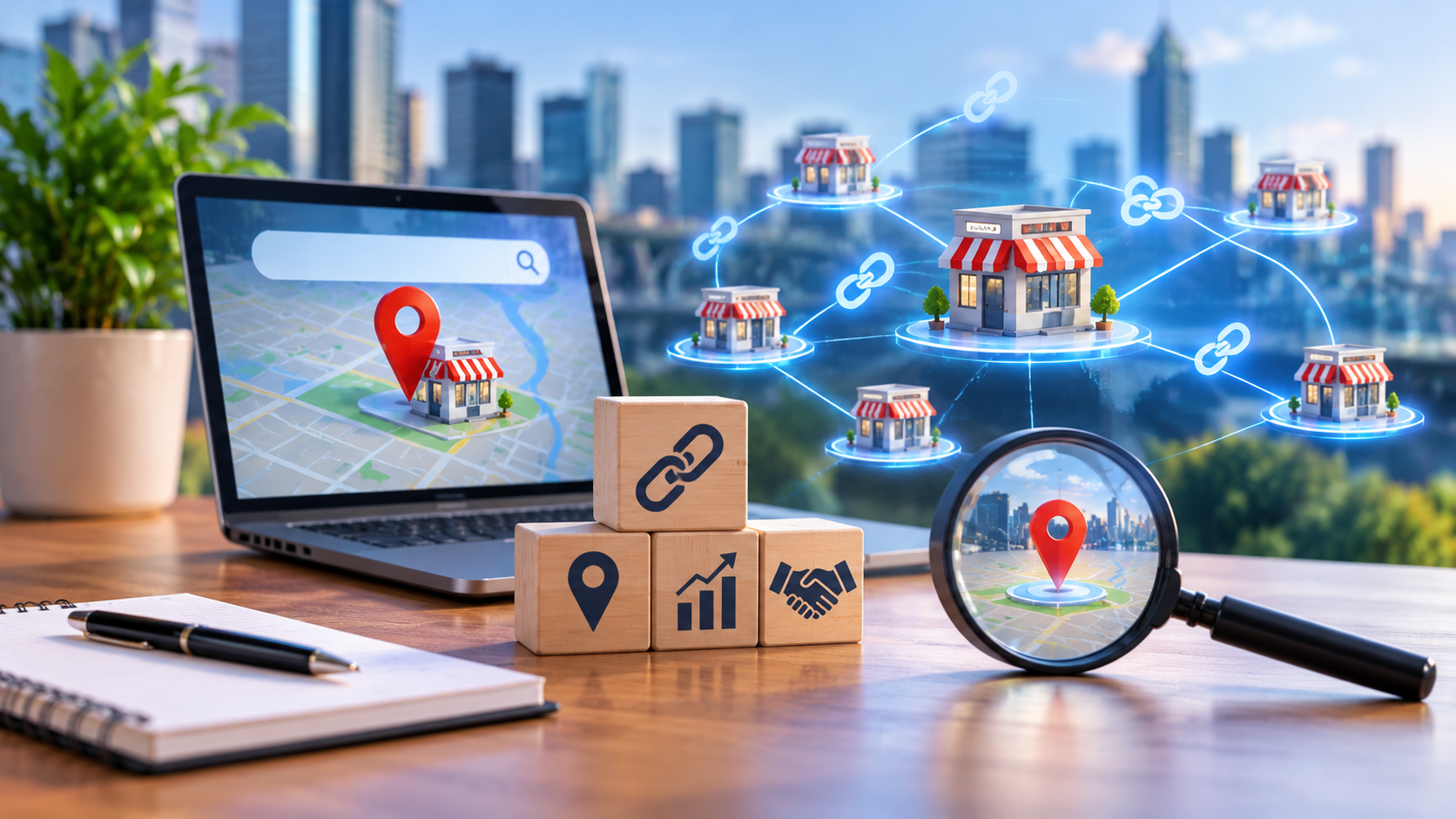
Local link building is the process of earning backlinks from websites, organizations, publications, and online resources connected to a specific geographic area or community.
A backlink is a link from another website that directs visitors to your website. When a local news website, business association, community organization, or relevant local blog links to your business, it creates a connection between your website and that local source.
For example, an Omaha-based digital marketing agency might receive backlinks from:
- Omaha business directories and local chambers of commerce.
- Nebraska business publications and news websites.
- Local event organizers and community organizations.
- Omaha-based business blogs and industry publications.
- Local partners, suppliers, and professional associations.
These links can help people discover your business while giving search engines additional context about your website and its relevance.
In simple terms: Local link building helps establish connections between your business and trusted websites within your service area.
Does Local Link Building Still Matter in 2026?
Yes. Despite the growth of AI-powered search, backlinks remain relevant to Google’s search systems.
Google’s documentation explains that its ranking systems use link analysis systems, including PageRank, to understand relationships between pages and identify useful content.
However, the value of a backlink depends on more than its existence. Relevance, editorial context, source quality, and the reason behind the link all matter.
Here are five reasons local link building continues to be valuable.
1. It Helps Establish Website Authority
When reputable websites link to your content, they create useful connections that search engines can discover and evaluate.
For example, a local business association linking to an Omaha company’s website provides a relevant connection between the organization and that business.
A strong backlink profile built through genuine relationships can support your website’s overall search visibility.
2. It Strengthens Local Relevance
Local backlinks can help establish a connection between your business and the geographic areas you serve.
Imagine a company offering digital marketing services in Omaha. Links from Nebraska business organizations, Omaha publications, and relevant local resources can reinforce its connection to that market.
This is particularly useful for businesses targeting location-based searches such as:
- Digital marketing agency in Omaha
- SEO services in Omaha
- Website development company in Nebraska
- Local marketing services near me
The important point is that the linking website should have a genuine connection to your business or audience.
3. It Creates Referral Traffic
Backlinks are not only about search rankings.
A link from a local publication, business association, or community website can introduce your company to people who may actually need your services.
For example, if an Omaha business publication features your marketing insights and links to your website, readers interested in improving their online presence may visit your site.
This can generate relevant website visits, service inquiries, and potential leads.
4. It Supports Brand Recognition and Trust
When your business is mentioned by respected local organizations, people can become more familiar with your brand.
Repeated appearances across relevant websites can help establish your business as an active participant in its industry and community.
This matters because customers often research multiple companies before choosing a service provider.
5. It Supports Visibility Across AI-Powered Search
AI-powered search experiences are changing how information is discovered and presented.
Platforms such as ChatGPT, Gemini, and Google’s AI search features can help users research businesses, compare services, and find useful resources.
Having useful content and a recognizable presence across relevant websites can contribute to a stronger online reputation.
However, it is important to understand that a backlink does not guarantee an AI citation or recommendation. Google has not established a separate backlink formula for AI Overviews or AI Mode.
The practical approach is to build genuine authority, publish helpful information, and maintain a consistent presence across relevant online sources.
How Has Local Link Building Changed in 2026?
Local link building has moved beyond simply submitting business websites to directories or exchanging links with other companies.
Search engines are becoming better at understanding content, context, and relationships between websites.
Businesses should therefore focus on earning links that provide real value to their audiences.
Here is how the approach has changed.
| Traditional Link Building | Local Link Building in 2026 |
|---|---|
| Collecting as many backlinks as possible | Earning relevant, quality backlinks |
| Submitting websites to random directories | Choosing trusted local directories |
| Repeated keyword-rich anchor text | Natural and descriptive anchor text |
| Buying links to improve rankings | Building genuine editorial relationships |
| Focusing only on backlink counts | Measuring traffic, visibility, and leads |
| Publishing generic guest posts | Creating useful, original industry content |
The biggest change is the shift from link quantity to link quality and relevance.
Businesses should no longer judge a link-building campaign only by the number of backlinks it generates.
Instead, they should ask whether those links connect them with the right audience, improve brand discovery, and support their wider digital marketing goals.
7 Effective Local Link Building Strategies for Businesses in 2026
A successful local link-building campaign does not require hundreds of complicated activities. It requires a consistent approach to creating useful content, building relationships, and finding relevant opportunities.
Here are seven practical strategies businesses can use.
1. Get Listed in Relevant Local Business Directories
Local business directories are a starting point for link building.
However, not every directory is worth submitting your business to. Focus on established platforms that provide genuine business information and help customers discover local services.
Consider opportunities such as:
- Local Chamber of Commerce websites.
- Regional business associations.
- Trusted city and community directories.
- Industry-specific business directories.
- Local professional organizations.
Make sure your business name, address, phone number, website, and service information are accurate.
Avoid submitting your website to hundreds of low-quality directories simply to increase your backlink count.
2. Build Relationships With Local Businesses
Partnerships can create natural backlink opportunities.
Think about businesses that serve a similar audience but do not directly compete with your services.
For example, a digital marketing agency could build relationships with:
- Local website development companies.
- Branding and graphic design agencies.
- Business consultants.
- Marketing professionals.
- Local technology providers.
You can collaborate on useful resources, participate in business discussions, contribute expert insights, or create joint educational content.
When these relationships produce relevant website mentions or editorial links, they can benefit both businesses.
3. Earn Links Through Local News and Publications
Local news websites and industry publications can provide valuable opportunities to reach a wider audience.
Instead of sending generic promotional messages, give journalists and editors something genuinely useful to cover.
You could share:
- Original research about local business marketing trends.
- Insights into how AI is changing digital marketing.
- Expert commentary on website and search updates.
- Results from a local business survey.
- Practical advice for small business owners.
For example, SandStream could contribute insights about how Omaha businesses can adapt their digital marketing strategies to changing search behavior.
A relevant editorial mention can introduce your business to readers while creating a meaningful connection with a local publication.
4. Create Locally Relevant Content Worth Linking To
One of the most sustainable link-building strategies is publishing content that other websites naturally want to reference.
Generic articles often provide little reason for another website to link to them.
Instead, create resources that answer questions specific to your local audience.
Examples include:
- Omaha Small Business Digital Marketing Guide.
- Local SEO Checklist for Nebraska Businesses.
- How Omaha Businesses Can Improve Website Conversions.
- Digital Marketing Trends Affecting Local Businesses in 2026.
- Website Performance Challenges for Small Businesses.
You can also publish original surveys, industry comparisons, useful statistics, and practical guides.
When local organizations or industry websites reference your research, you have an opportunity to earn relevant backlinks.
5. Participate in Local Events and Community Activities
Community involvement can create natural opportunities for online brand mentions and backlinks.
Businesses can participate in:
- Local business networking events.
- Community development programs.
- Industry conferences.
- Educational workshops.
- Local nonprofit initiatives.
- Business sponsorship programs.
For example, if your business sponsors a relevant community event, the organizer may feature your company on its website.
Similarly, participating as a speaker at a local business event could lead to a speaker profile or event recap that links to your website.
The primary goal should be genuine participation rather than sponsoring activities only to obtain backlinks.
6. Use Guest Contributions to Reach Local Audiences
Guest contributions allow businesses to share knowledge with audiences on other websites.
Look for local publications, business blogs, and industry websites that accept useful expert contributions.
For example, a digital marketing agency could contribute articles about:
- Common SEO mistakes made by small businesses.
- How local companies can improve online visibility.
- The role of AI in digital marketing.
- Website improvements that help generate leads.
Focus on publishing original, informative material that matches the audience of the website.
Avoid mass-produced guest posts, paid do-follow link schemes, and repetitive keyword-rich anchor text.
The value comes from sharing useful expertise and building genuine industry relationships.
7. Turn Customer Success Stories Into Link Opportunities
Customer success stories can create opportunities for relevant backlinks and brand mentions.
If a business has achieved meaningful results through a collaboration with your company, consider publishing a case study with the customer’s permission.
A useful case study could explain:
- The original business challenge.
- The strategy used to address it.
- The work completed.
- The measurable results.
- Lessons other businesses can apply.
Your customer may choose to reference the case study from their website, company news section, or partner page when it is genuinely relevant.
This approach can also help potential customers understand your services and the value of working with your business.
How Does AI Search Link Building Work?
AI search link building is an approach to earning relevant links and brand mentions that supports a business’s wider online visibility.
It is important to separate established SEO practices from assumptions about how AI platforms select their sources.
AI-powered search experiences can retrieve, interpret, and summarize information from multiple sources. Google explains that its AI search features continue to rely on foundational SEO practices and indexed website content.
This means businesses should focus on building a reliable digital presence rather than chasing shortcuts designed specifically for AI systems.
Here are four areas to prioritize.
1. Build a Consistent Brand Presence
Your business information should be accurate and consistent across your website, business profiles, relevant directories, and industry resources.
Use the same business name, website, contact details, and service descriptions wherever appropriate.
A consistent presence makes it easier for customers and search systems to understand which business is being discussed.
2. Earn Mentions From Relevant Websites
Not every valuable brand mention needs to include a backlink.
For example, a local publication might mention your company while discussing digital marketing services in Omaha.
Such mentions can contribute to brand awareness, although an unlinked mention should not be treated as equivalent to a followed backlink or a guaranteed AI ranking signal.
Focus on earning genuine recognition from relevant organizations and publications.
3. Publish Original and Helpful Information
AI-powered search tools need useful information to answer user questions.
Create content that provides clear explanations, practical examples, original insights, and accurate business information.
For example, instead of publishing a generic article about SEO, create a detailed resource explaining how local businesses can improve their search visibility, what challenges they face, and which strategies they can implement.
Original information gives other websites a reason to reference your content.
4. Make Your Website Easy to Understand
A strong external link profile cannot compensate for unclear or unhelpful website content.
Make sure your website clearly explains:
- What your business does.
- Which services you provide.
- Which locations you serve.
- Who your ideal customers are.
- How customers can contact you.
Use descriptive headings, relevant internal links, helpful FAQs, and structured data that accurately reflects visible page content.
These practices help users and search engines understand your website.
Which Local Backlinks Should Businesses Avoid?
Building backlinks without checking their quality can create more problems than benefits.
Google’s spam policies identify several link-building practices that can violate its guidelines.
Businesses should avoid the following:
1. Buying backlinks to manipulate rankings: Paying for links that pass ranking credit can violate Google’s link spam policies. Paid advertising and sponsorship links should be properly qualified.
2. Using unrelated directories: Submitting your website to irrelevant or low-quality directories adds little value and can create an unnatural backlink profile.
3. Excessive link exchanges: Repeatedly exchanging links with other businesses solely to manipulate rankings is not a sustainable strategy.
4. Automated backlink creation: Using automated tools or services to generate large numbers of backlinks can create spam-related risks.
5. Keyword-stuffed anchor text: Repeatedly using exact-match keywords such as “best local SEO company in Omaha” can make links appear unnatural.
6. Publishing low-value guest posts: Publishing articles on unrelated websites primarily to obtain backlinks does not build meaningful authority.
A good rule is simple: If a backlink would provide no genuine value to a reader, reconsider whether it is worth pursuing.
How to Measure the Success of Local Link Building
A successful local link-building campaign should be measured by its contribution to business visibility and growth, not just the total number of backlinks.
Businesses can use several metrics to evaluate their progress.
| Metric | What It Helps Measure |
|---|---|
| Referring domains | Number of unique websites linking to your site |
| Relevant backlinks | Links from websites related to your industry or location |
| Referral traffic | Visitors arriving through external links |
| Organic impressions | How often your pages appear in Google Search |
| Keyword rankings | Visibility for relevant local search terms |
| Local search visibility | Presence in relevant location-based searches |
| Conversions and leads | Inquiries, calls, and form submissions generated |
Tools such as Google Search Console, Google Analytics 4, and backlink analysis platforms can help monitor these results.
For example, if a local publication links to one of your service pages, you can monitor referral visits and check whether that page receives increased organic visibility over time.
Remember that rankings and conversions are influenced by multiple factors. A single backlink should not be credited with every improvement.
How Often Should Businesses Build Local Backlinks?
There is no fixed number of backlinks that every local business needs each month.
The right approach depends on your industry, competition, website authority, location, and available opportunities.
A small local business may benefit more from earning three relevant editorial backlinks than from acquiring 100 unrelated directory links.
Instead of setting an arbitrary backlink target, create a consistent process:
- Identify relevant local websites and organizations.
- Review their audience and content quality.
- Find opportunities to contribute useful information.
- Build relationships with local publishers and businesses.
- Track newly earned links and referral traffic.
- Review the results and improve your approach.
Consistency and relevance are more important than chasing backlink numbers.
Local Link Building vs. Traditional Link Building: What’s the Difference?
Both approaches aim to earn links from external websites, but they have different priorities.
Traditional link building often focuses on building website authority through relevant links from websites across different industries and locations.
Local link building places additional emphasis on geographic relevance, community relationships, and connections with organizations in the business’s service area.
For a local business, a relevant link from a respected regional publication may be more useful than a link from an unrelated website with a much larger audience.
However, this does not mean local links should replace all other relevant backlinks. Businesses serving broader markets can benefit from a balanced link profile that includes both local and industry-specific sources.
The best strategy is to prioritize links that make sense for your audience and business goals.
Final Thoughts: Is Local Link Building Worth It in 2026?
Local link building remains an important part of a well-rounded SEO strategy in 2026. What has changed is the approach businesses should take to earn backlinks.
Instead of focusing on link quantity, businesses should prioritize relevant websites, trusted local organizations, useful content, and genuine industry relationships.
These activities can support search visibility, referral traffic, brand recognition, and customer discovery.
As AI-powered search continues to evolve, businesses should also focus on publishing accurate information and building a consistent online presence. No backlink strategy can guarantee placement in Google AI Overviews or recommendations from ChatGPT, Gemini, or Perplexity.
For businesses in Omaha and beyond, the opportunity is to build a digital presence that customers can trust and search engines can understand.
Want to improve your business’s online visibility? SandStream provides customized digital marketing solutions designed to help businesses connect with their target audiences. From digital strategy and paid search to creative services and marketing technology, the right combination of marketing solutions can help turn online visibility into meaningful business opportunities.