
The digital advertising landscape is evolving rapidly, and one of the biggest drivers of this transformation is Google Ads automation. With the integration of artificial intelligence and machine learning, businesses no longer need to rely entirely on manual campaign management. Instead, automation is reshaping how ads are created, optimized, and scaled-ultimately redefining the future of online advertising.
What Is Google Ads Automation?
Google Ads automation refers to the use of AI-driven tools within Google Ads to manage campaigns, optimize bids, and improve performance with minimal manual effort. These systems analyze user behavior, search intent, and historical data to make smarter decisions in real time.
With the growing importance of AI in digital advertising, automation is quickly becoming a necessity rather than a choice for advertisers.
The Role of AI in Digital Advertising
Artificial intelligence is at the core of today’s advertising ecosystem. It allows marketers to understand audience behavior, predict future actions, and deliver personalized experiences at scale.
Instead of relying on assumptions, AI in digital advertising uses real-time insights to continuously refine campaigns. This not only improves targeting but also increases the chances of conversions by showing ads to users who are most likely to engage.
Key Google Ads AI Tools Driving Automation
Google provides a range of advanced Google Ads AI tools that simplify campaign management and enhance results. These tools are designed to reduce manual work while improving campaign accuracy.
Some of the most impactful tools include smart bidding strategies, responsive search ads, Performance Max campaigns, and audience signals. Each of these features uses machine learning to optimize campaigns dynamically and deliver better outcomes over time.
Benefits of Google Ads Automation
Automation plays a crucial role in shaping the future of online advertising by making campaigns more efficient and data-driven. Instead of spending hours adjusting bids or analyzing reports, marketers can focus on strategy and creativity.
Key benefits include:
- Improved efficiency by reducing manual tasks
- Better performance through continuous optimization
- More precise targeting based on user behavior
- Scalability for managing large campaigns
- Data-driven decisions with minimal human error
These advantages make AI-powered ad campaigns more reliable and impactful for businesses of all sizes.
How Smart Bidding Strategies Are Transforming Campaigns
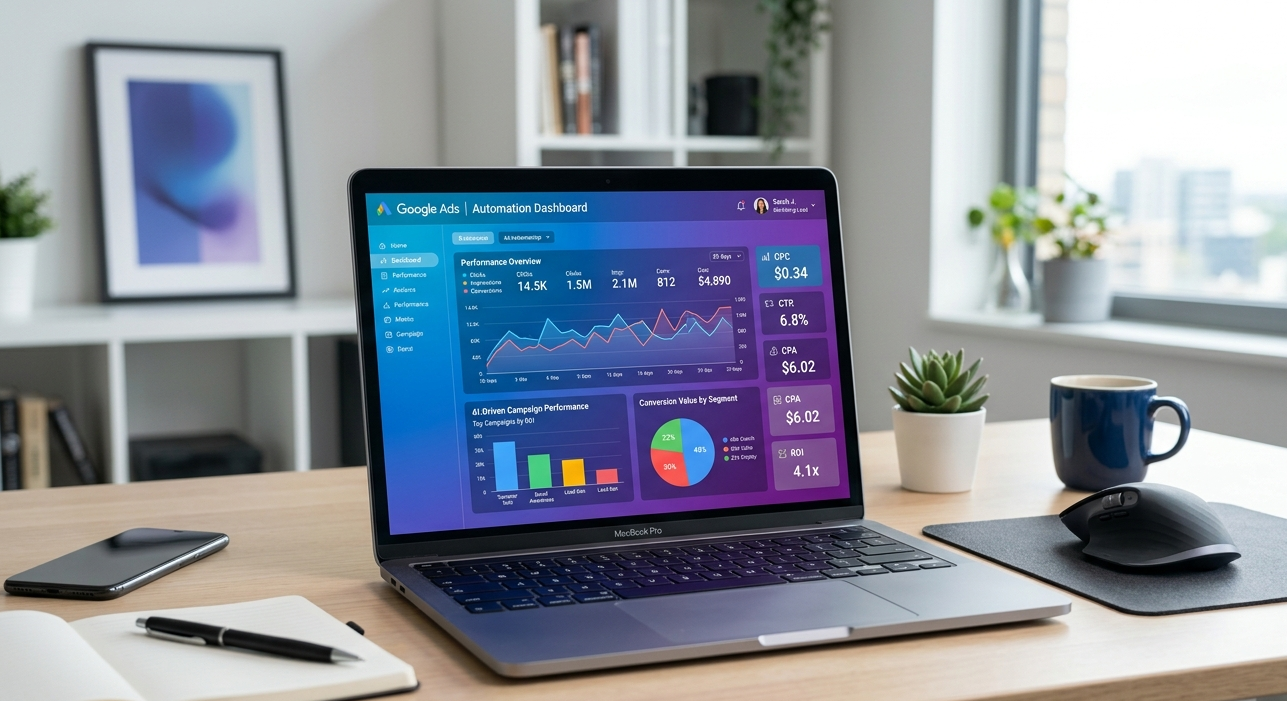
One of the most powerful features of Google Ads automation is smart bidding strategies. These strategies use machine learning to automatically adjust bids based on various signals such as location, device, time, and user intent.
Instead of manually setting bids, advertisers can rely on AI to make data-driven decisions in real time. This leads to improved conversion rates and a higher return on ad spend. Over time, campaigns become more adaptive and aligned with user behavior.
The Rise of AI-Powered Ad Campaigns
The shift toward AI-powered ad campaigns marks a significant change in how digital marketing operates. Traditional campaigns were often static and required constant manual updates. In contrast, automated campaigns are dynamic and continuously evolving.
With AI-powered automation:
- Campaigns learn from user interactions
- Targeting adjusts automatically based on performance
- Ad creatives are optimized in real time
This transformation is helping businesses connect with their audiences more effectively and efficiently.
Challenges of Google Ads Automation
Despite its many benefits, Google Ads automation also comes with a few challenges. Some marketers feel a loss of control when relying heavily on automation. Additionally, these tools require sufficient data to perform effectively, which can be a limitation for smaller campaigns.
There is also a learning curve involved in understanding how to use automation tools properly. However, once mastered, they can significantly improve overall campaign performance.
What the Future Holds
The future of online advertising is clearly moving toward deeper integration of AI and automation. As technology continues to advance, we can expect even smarter tools that offer greater personalization and predictive capabilities.
Automation will not replace marketers but will enhance their ability to make strategic decisions. Businesses that adopt Google Ads automation early will be better positioned to stay ahead of the competition.
Conclusion
Google Ads automation is transforming the way businesses approach digital marketing. By leveraging AI in digital advertising, brands can run more efficient, scalable, and high-performing campaigns.
As competition increases, using Google Ads AI tools and smart bidding strategies will become essential for success. Embracing AI-powered ad campaigns today means preparing for the future of advertising.
For businesses aiming to stay competitive and maximize results, adopting automation solutions with platforms like sandstream can make a meaningful impact.