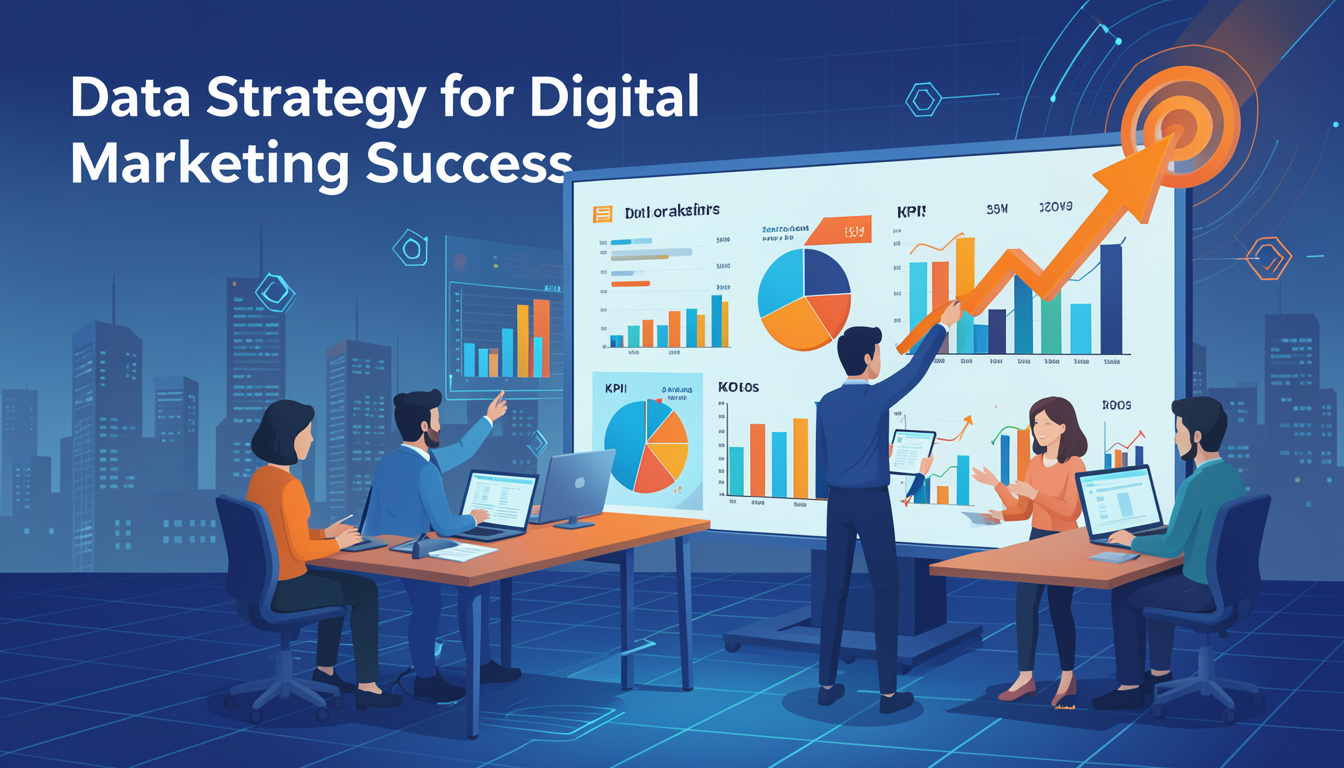
In today’s hyper-competitive digital landscape, gut feelings and guesswork simply don’t cut it anymore. Brands that consistently outperform their competitors share one common trait – they have a solid data strategy for digital marketing in place. Rather than reacting to trends after the fact, they use structured data to anticipate customer behavior, allocate budgets smarter, and deliver the right message at the right time.
If your marketing results feel unpredictable, inconsistent, or hard to measure, the problem likely isn’t your campaigns – it’s the absence of a clear data strategy behind them.
What Is a Data Strategy in Marketing?
A data strategy in marketing is a structured framework that defines how your organization collects, manages, analyzes, and acts on data to achieve marketing goals. It’s not just about having access to data – it’s about making that data useful, trustworthy, and actionable.
Without a strategy, businesses end up with data sitting in silos – scattered across CRMs, ad platforms, email tools, and web analytics – with no way to connect the dots. A proper data strategy breaks those silos down and creates a unified view of your customer, your campaigns, and your overall performance.
This foundation is what separates businesses that grow predictably from those that chase vanity metrics and wonder why their marketing spend isn’t paying off.
Why a Data-Driven Marketing Strategy Outperforms Intuition
A data-driven marketing strategy replaces assumptions with evidence. Instead of asking “What do we think customers want?” you ask “What does the data tell us customers are doing – and why?”
Here’s how this shift creates real performance gains:
Better audience targeting: When you analyze behavioral data, purchase history, and engagement patterns, you stop wasting budget on broad, unqualified audiences. You focus on the segments most likely to convert, which lowers your cost per acquisition and raises your return on ad spend.
Smarter content decisions: Data tells you which formats, topics, and channels your audience actually responds to – not what you assume they like. Blog posts that drive traffic, emails that get opened, videos that convert – all of this becomes visible when you measure consistently.
Faster campaign optimization: Without data, you wait until a campaign ends to judge its performance. With a data strategy, you track real-time signals and adjust mid-flight — pausing underperforming ads, scaling winning creatives, and reallocating budgets before money is wasted.
Stronger customer retention: Data-driven marketers don’t just focus on acquisition. They use behavioral data to identify churn signals early, trigger re-engagement campaigns at the right moment, and personalize experiences that keep customers coming back.
The Role of Marketing Data Analytics
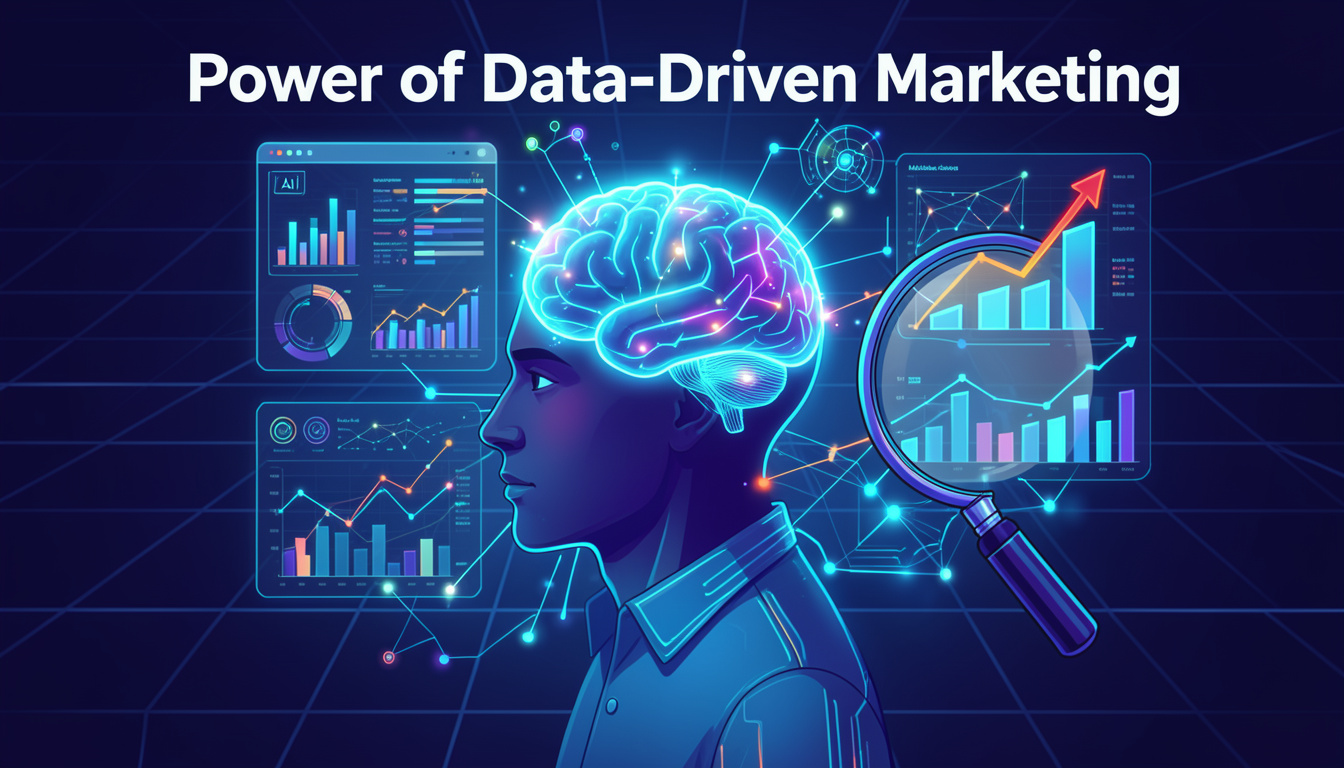
Marketing data analytics: is the engine that powers your data strategy. It transforms raw numbers into actionable insights – turning a mountain of clicks, impressions, and conversions into clear answers about what’s working and what’s not.
There are four levels of marketing analytics that every team should understand:
Descriptive analytics: answers “What happened?” – your traffic reports, campaign summaries, and monthly dashboards live here. This is the most basic level, but it’s also where many businesses stop.
Diagnostic analytics: answers “Why did it happen?” – it helps you identify the root cause behind a spike or drop in performance. Did conversions fall because of a landing page issue, a targeting change, or a seasonal shift?
Predictive analytics: answers “What’s likely to happen?” – using historical patterns to forecast future behavior. This is where AI and machine learning tools are becoming increasingly powerful, allowing marketers to anticipate demand and personalize outreach at scale.
Prescriptive analytics: answers “What should we do?” – it goes beyond prediction to recommend the best course of action based on data. This is the most advanced layer, but even small businesses can start applying it with the right tools and mindset.
Building even a basic analytics capability across these four levels puts your team in a position to make smarter decisions consistently.
How to Build a Data Strategy for Digital Marketing
Implementing a data strategy for digital marketing doesn’t require a massive tech stack or a team of data scientists. It starts with clarity and discipline.
Step 1: Define your marketing goals: Data strategy without clear goals produces noise, not insight. Know whether you’re optimizing for brand awareness, lead generation, customer acquisition, or retention – because each goal demands different data points.
Step 2: Audit your data sources: Map out every platform generating data – your website, CRM, email platform, paid ads, social media, and any offline channels. Identify gaps and redundancies.
Step 3: Standardize tracking and measurement: Implement consistent UTM parameters, conversion tracking, and event tagging across all channels. Without clean, consistent data collection, your analytics will always be unreliable.
Step 4: Centralize your data: Use a customer data platform (CDP), data warehouse, or even a well-structured dashboard tool to bring all your data into one place. This unified view is what enables cross-channel insights.
Step 5: Build a culture of testing: Data strategy thrives when teams run continuous A/B tests, question assumptions, and let results guide decisions rather than seniority or opinion.
Data Analytics for Marketing: The Competitive Advantage You Can’t Ignore
Data analytics for marketing is no longer a luxury reserved for enterprise brands with massive budgets. Thanks to accessible tools like Google Analytics 4, HubSpot, Meta Ads Manager, and Looker Studio, even small and mid-sized businesses can build robust analytics capabilities.
The brands winning in digital marketing today aren’t necessarily spending the most — they’re spending the smartest. They know which channels deliver the highest lifetime value customers. They know exactly what messaging converts. They know when to scale and when to pause.
That knowledge comes from data – structured, analyzed, and acted on through a clear strategy.
Final Thoughts
A well-defined data strategy doesn’t just improve your marketing metrics – it transforms how your entire organization thinks about growth. It replaces reactive decision-making with proactive intelligence, and turns your marketing spend from a cost into a measurable investment.
Whether you’re just getting started or looking to mature your existing approach, building a strong data-driven marketing strategy is one of the highest-leverage moves your business can make right now. The data is already there – the question is whether you’re using it to its full potential. If you’re ready to take that next step, contact us today – our team is here to help you build a strategy that turns your data into measurable growth.